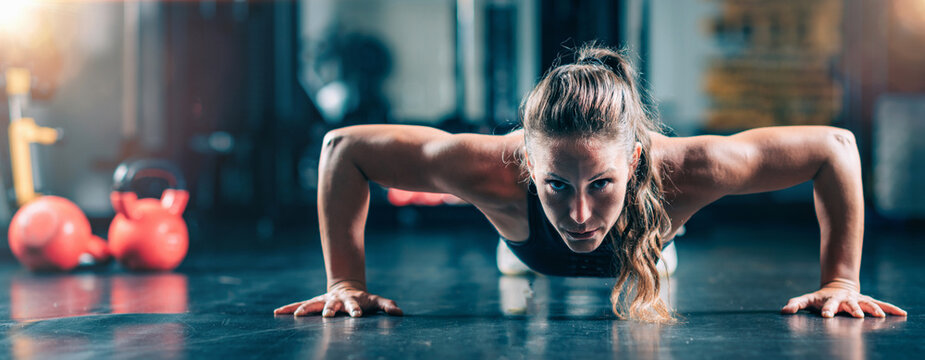
For years, conversations around women and exercise have been reduced to a simplistic question: cardio or strength training? While this framing is easy to communicate, it fails to reflect the biological, hormonal, and long-term health realities of the female body.
At Milane Femme, we believe movement deserves a more intelligent narrative—one grounded in science, nuance, and longevity rather than trends, extremes, or reductionist messages. This article revisits common myths surrounding women and exercise, integrates menstrual cycle considerations, and broadens the focus toward variety, sustainability, and long-term health, all supported by high-quality scientific evidence.
Why has exercise for women been oversimplified?
Historically, exercise science has been dominated by male participants. Women were often excluded from research due to hormonal variability across the menstrual cycle (Costello et al., 2014). As a result, many training recommendations were generalized, prioritizing intensity and performance rather than adaptation to female physiology.
More recent research shows that women respond differently to training stress, recovery demands, and energy availability. This means that overly simplistic prescriptions are not only ineffective, but in some cases counterproductive (Elliott-Sale et al., 2021).
Myth 1: “If women train with weights, they will become bulky”
Scientific reality: Women have significantly lower circulating testosterone levels than men, which limits hypertrophy potential under natural conditions. Strength training in women is consistently associated with improvements in bone density, metabolic health, posture, and the prevention of sarcopenia—without excessive muscle gain (Stamatakis et al., 2022).
In addition, muscle tissue is metabolically active and contributes to higher resting energy expenditure and improved insulin sensitivity (Colberg et al., 2016).
Strength training is not about becoming bigger—it is about becoming stronger and more resilient.
Myth 2: “Cardio is the only effective way to lose fat”
Scientific reality: Fat loss is driven by sustained energy balance, not by a single exercise modality. While cardiovascular exercise improves cardiorespiratory and metabolic health, combining aerobic activity with resistance training produces superior outcomes in body composition and metabolic regulation (Piercy et al., 2018).
Importantly, performing large volumes of cardio without adequate recovery or sufficient energy intake can increase physiological stress. In women, this may negatively impact menstrual function and hormonal balance (Hackney, 2020).
Myth 3: “The more I sweat, the more fat I burn”
Scientific reality: Sweating is a thermoregulatory mechanism—not an indicator of fat oxidation. Fat loss occurs through biochemical processes related to lipolysis and cumulative energy expenditure, not through fluid loss (Colberg et al., 2016).
High-intensity sessions may produce greater sweat loss, but this does not inherently translate into greater fat loss.
Myth 4: “The more hours I train, the better the results”
Scientific reality: Training adaptation depends on the balance between stimulus and recovery. Excessive volume without sufficient rest can lead to overreaching, chronic fatigue, and impaired performance—particularly in women, who may be more sensitive to cumulative stress load (Hackney, 2020).
Well-structured, high-quality training combined with adequate recovery consistently outperforms approaches based solely on higher volume.
Rest is not a weakness—it is a biological requirement.
Exercise, the menstrual cycle, and intelligent training
The menstrual cycle is not a limitation—it is a physiological rhythm. Hormonal fluctuations across the cycle influence strength potential, substrate utilization, perceived exertion, and recovery capacity (McNulty et al., 2020).
Evidence suggests that:
- Higher-intensity and strength-focused training may feel more tolerable during the mid-follicular phase
- Lower-intensity movement, walking, and mobility work may be more supportive during the late luteal and menstrual phases
- Rigid, one-size-fits-all programming ignores these biological realities
Respecting cycle variability does not reduce performance—it supports long-term adherence and health.
Moving beyond cardio vs strength: the role of variety
A large prospective cohort study published in BMJ Medicine followed tens of thousands of adults over several decades to examine how different types and combinations of physical activity relate to mortality risk (Stamatakis et al., 2024).
The findings are clear:
- Being physically active is associated with lower mortality across most activity types
- Engaging in a variety of activities provides additional benefits, even after accounting for total activity volume
- No single modality holds a monopoly on health outcomes
This supports a critical shift in perspective: the body thrives on varied movement stimuli, not repetitive stress.
Walking: simple, underestimated, and evidence-based
Among all activity types analyzed, walking demonstrated the most consistent and robust association with reduced mortality risk across outcomes (Stamatakis et al., 2024).
Walking supports:
- Cardiovascular health
- Glucose regulation
- Nervous system balance
- Low injury risk and high sustainability
From both a physiological and behavioral standpoint, walking is uniquely compatible with female health, menstrual cycle variability, and long-term adherence (Piercy et al., 2018).
It is not a fallback option—it is a foundational practice.
Interpreting exercise science with critical thinking
Some observational dose–response curves appear non-linear or counterintuitive. For example, cycling in the BMJ Medicine study shows a W-shaped association with mortality, suggesting potential harm at moderate levels (Stamatakis et al., 2024).
From a biological perspective, such patterns are unlikely to represent true harm. They are more plausibly explained by statistical noise, smaller sample sizes at extreme activity levels, and model overfitting.
When confidence intervals largely remain below a risk ratio of 1.0, claims of harm should be interpreted cautiously.
Science requires both data and judgment.
Reframing exercise for female longevity
When exercise is viewed through a longevity lens, the message becomes refreshingly simple:
- Move regularly
- Walk often
- Strength train intelligently
- Vary your activities
- Avoid unnecessary physiological stress
Approximately 5 MET-hours per week—equivalent to around 75 minutes of brisk walking—already confers measurable reductions in mortality risk (Stamatakis et al., 2024).
If physical activity were a pharmaceutical intervention with these effects on cardiovascular disease, metabolic health, mental well-being, and longevity, it would be considered one of the most powerful therapies available.
Conclusion: train with intelligence, not extremes
The future of women’s fitness is not about choosing sides between cardio and strength. It is about understanding context, biology, and sustainability.
At Milane Femme, we advocate for movement that supports health across decades—not just weeks. Movement that adapts to your physiology, your cycle, and your life.
Because longevity is not built through extremes, but through consistent, intelligent care of the body.
References
Armour, M., Smith, C. A., Steel, K. A., & Macmillan, F. (2019). The effectiveness of self-care and lifestyle interventions in primary dysmenorrhea: A systematic review and meta-analysis. BMC Complementary Medicine and Therapies, 19(1), 22. https://doi.org/10.1186/s12906-019-2433-8
Colberg, S. R., et al. (2016). Physical activity/exercise and diabetes: A position statement of the American Diabetes Association. Diabetes Care, 39(11), 2065–2079. https://doi.org/10.2337/dc16-1728
Costello, J. T., Bieuzen, F., & Bleakley, C. M. (2014). Where are all the female participants in sports and exercise medicine research? European Journal of Sport Science, 14(8), 847–851. https://doi.org/10.1080/17461391.2014.911354
Elliott-Sale, K. J., et al. (2021). Methodological considerations for studies in female athletes. Sports Medicine, 51(5), 843–861. https://doi.org/10.1007/s40279-021-01435-8
Hackney, A. C. (2020). Stress and the neuroendocrine system: The role of exercise as a stressor and modifier of stress. Expert Review of Endocrinology & Metabolism, 15(2), 77–89. https://doi.org/10.1080/17446651.2020.1727820
McNulty, K. L., et al. (2020). The effects of menstrual cycle phase on exercise performance. Sports Medicine, 50(10), 1813–1827. https://doi.org/10.1007/s40279-020-01319-3
Piercy, K. L., et al. (2018). The physical activity guidelines for Americans. JAMA, 320(19), 2020–2028. https://doi.org/10.1001/jama.2018.14854
Stamatakis, E., et al. (2022). Associations of muscle-strengthening activity with mortality. British Journal of Sports Medicine, 56(13), 755–762. https://doi.org/10.1136/bjsports-2021-105061
Stamatakis, E., et al. (2024). Associations of different types and variety of physical activity with mortality risk: A prospective cohort study. BMJ Medicine, 5(1), e001513. https://doi.org/10.1136/bmjmed-2023-001513